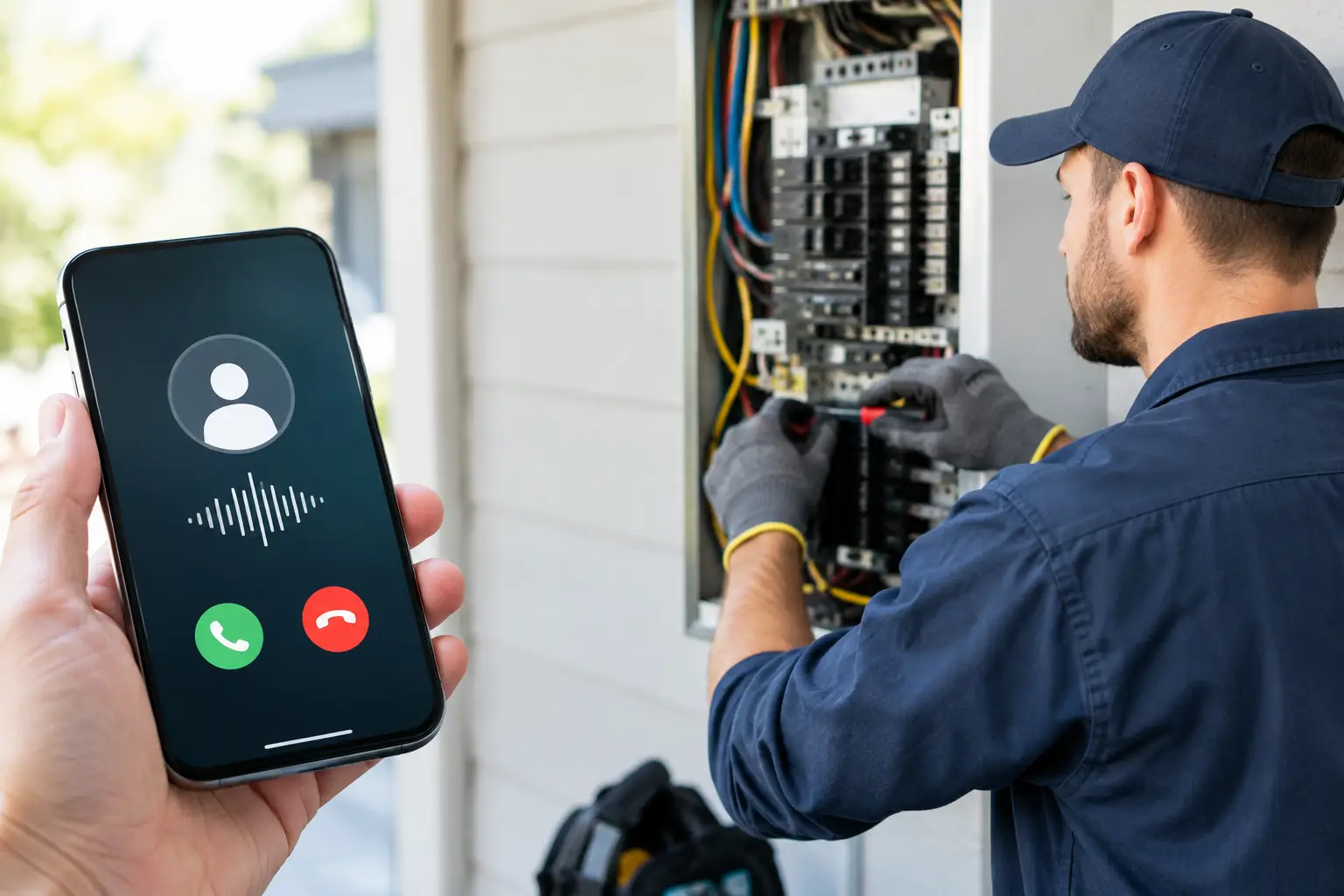
A homeowner with sparks coming from an outlet does not want to leave a voicemail. A property manager with a panel issue does not want to wait until morning for a callback. When your crew is in the field, your office is busy, or the day is over, AI phone answering for electricians gives every caller an immediate, useful response instead of a dead end.
For electrical contractors, the phone is not just an administrative tool. It is where emergency jobs, service calls, estimates, repeat customers, and referral opportunities begin. The problem is that the people best qualified to answer technical questions are usually on ladders, in crawlspaces, at job sites, or driving between appointments. A missed call can quickly become a booked job for another contractor.
Why missed electrical calls cost more than one job
Not every caller needs the same response. Someone asking about a ceiling-fan installation can be scheduled for a standard appointment. Someone reporting a burning smell near their breaker panel may need clear safety guidance and an urgent escalation. A commercial client with power out in part of a building may need to reach an on-call technician right away.
Voicemail treats all of those calls the same. It asks customers to explain the problem, then wait. That creates extra work for your team and uncertainty for the caller. It also leaves you with incomplete details: no service address, no preferred time, no idea whether the issue is urgent, and no clear record of what was discussed.
A trained AI receptionist answers on the first ring, asks the right questions, and follows your operating rules. It can collect the caller's name, phone number, address, service need, and timing. It can identify high-priority situations, offer approved appointment windows, and send your team a complete call summary before anyone has to return the call.
That speed matters most after hours and during peak periods. If a dispatcher is already coordinating technicians or a service manager is handling a difficult job, the next inbound call should not be forced to wait.
What AI phone answering for electricians should handle
The right system is not a generic chatbot reading a script. It should operate like a front desk built around your services, service area, business hours, calendar, and emergency procedures.
For a typical electrical business, that starts with understanding why the caller is reaching out. The agent can distinguish between a new estimate request, a residential repair, a commercial service issue, a follow-up from an existing customer, or a vendor call. From there, it should guide the conversation based on the type of work.
Qualifying new service calls
A useful call intake does more than ask, “How can we help?” It collects details that help you decide what happens next. For example, an agent may ask whether the customer is experiencing flickering lights, repeated breaker trips, an outlet that has stopped working, or a request for an EV charger installation.
It can also confirm the job address, determine whether the caller is within your service area, and capture access notes. For estimate requests, it can gather the project type and timeline so your estimator is prepared before making contact.
The goal is not to diagnose electrical work over the phone. It is to capture clean, actionable information and move the caller to the correct next step.
Booking appointments while the caller is still engaged
A caller who is ready to book should not have to wait for an office callback if your schedule has openings. With access to your live availability and booking rules, an AI receptionist can offer appointment windows and place the job on the calendar during the call.
That can be especially valuable for routine service requests such as troubleshooting, fixture replacements, smoke detector issues, dedicated circuits, and electrical inspections. Your team can set parameters for appointment types, service durations, coverage areas, and booking windows.
There are trade-offs. Complex commercial projects, large remodels, and jobs that require a site assessment may be better routed as a qualified lead rather than booked directly. A well-configured agent should know the difference, rather than forcing every caller into the same calendar slot.
Routing urgent calls without creating risk
Electrical emergencies require a careful workflow. Your phone agent should never make promises it cannot support or offer unsafe advice outside your approved guidelines. Instead, it can recognize your defined escalation signals, collect the essential details, share your approved safety notice, and transfer the caller to the right on-call contact when appropriate.
Your routing rules might prioritize reports of smoke, burning odors, visible sparking, partial power loss at a business, or a customer who has already lost critical equipment. You decide which calls trigger a live transfer, which create an immediate alert, and which are scheduled for the next available technician.
This is where a managed setup matters. The workflow needs to reflect how your company actually responds after hours, not how a generic call center assumes an electrical company should operate.
The difference between an AI receptionist and a call menu
Traditional phone trees often make callers press buttons, repeat themselves, and wait in a queue. Outsourced answering services can provide basic coverage, but agents may not know your electrical services, geographic boundaries, pricing policy, or dispatch process. They may take a message, but they cannot always complete the next step.
An AI voice agent can provide a more direct experience when it is configured correctly. It speaks naturally, uses your business-specific information, and can work with your existing calendar, lead workflow, and call-routing instructions. It can answer common questions about hours, service areas, financing options, or whether you handle a specific job type, based on the information you approve.
It should also leave a clear internal record. Call transcripts, summaries, recording notices where required, and structured lead data give your office team context without forcing them to listen to every call. A dispatcher can see what happened, what the customer needs, and whether the appointment is already booked.
Set the rules before the phone starts ringing
The value of AI phone answering is determined by the operating rules behind it. Before launch, map the calls your business receives most often and decide what a good outcome looks like for each one.
Start with your core services. Define the jobs you want booked automatically, the jobs that need an estimate request, and the calls that should be transferred. Then document your hours, service area, emergency coverage, payment or financing information, and any questions the agent should not answer.
Your scheduling process deserves the same attention. If you only dispatch certain service calls by zone, reserve same-day slots for emergencies, or need buffers between appointments, the phone agent needs those rules. If your calendar is not the source of truth, direct booking may not be appropriate until that process is cleaned up.
Finally, decide who owns follow-up. Even the best front desk cannot replace a team that ignores qualified leads. Assign alerts for urgent calls, establish a response expectation for estimate requests, and review missed or abandoned calls regularly. The agent protects opportunities, but your team still needs to close them.
A realistic electrical service call flow
Picture a homeowner calling at 7:30 p.m. because several outlets in the kitchen have stopped working. Instead of reaching voicemail, they hear a professional greeting from your business. The agent confirms their name, address, callback number, and the issue. It asks approved safety-focused questions and identifies that there is no smoke, sparking, or active hazard.
If you offer after-hours dispatch for that situation, the call can be routed to the on-call technician. If it is not an emergency under your policy, the agent can offer the earliest available appointment and book it on the call. Your team receives the transcript and summary with the customer details, symptoms, and scheduled time.
The customer gets a response. Your technician gets context. Your office does not start the next morning with a vague voicemail and a lead that may already be gone.
Build coverage around your business, not the other way around
AI phone answering works best when it feels like an extension of your electrical company, not a layer placed between you and your customers. That means using your existing phone number, reflecting your preferred language and tone, and following the rules your office already uses to protect service quality.
Voicy takes a managed approach to that setup: learning how your calls should be handled, configuring the agent around your workflow, testing the call paths, and refining performance after launch. For electrical contractors, that creates a practical outcome: calls are answered, leads are qualified, urgent issues are routed correctly, and bookable jobs are placed on the schedule.
The next time your crew cannot answer because they are doing the work customers hired them for, your front desk can still be ready to answer the phone.