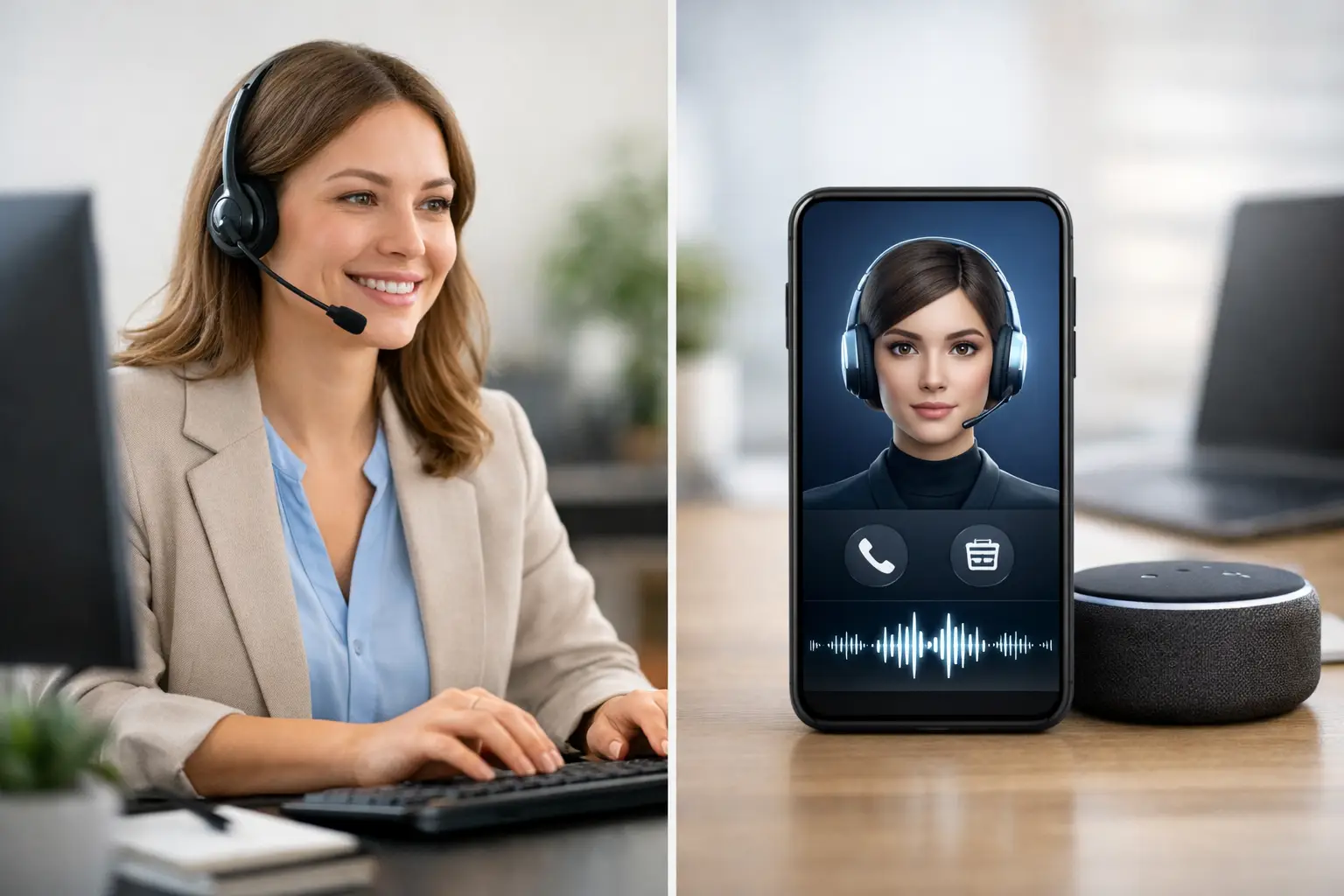
A missed call at 7:18 p.m. is not just a missed call for a plumber, dental office, property manager, or HVAC company. It may be a water heater replacement, an emergency patient request, or a consultation that goes to the first business that answers. The live receptionist vs AI decision comes down to one operational question: can your business respond correctly when the phone rings, every time it rings?
A live receptionist can bring empathy and judgment to complicated conversations. An AI receptionist can provide immediate, consistent coverage at hours when staffing is difficult or expensive. The better choice depends on the types of calls you receive, how often they come in, and what needs to happen before the caller hangs up.
Live receptionist vs AI: the real business comparison
The wrong comparison is whether a person or technology sounds more impressive. The useful comparison is what happens to a caller from the first ring to the next step.
For appointment-driven businesses, that next step may be booking an open calendar slot. For a home service company, it may be gathering the address, identifying an urgent issue, and routing an on-call technician. For a clinic, it may be answering a common question, recording the reason for the call, and sending the right information to the office.
A live receptionist and an AI receptionist can both support these outcomes. Their strengths are different.
Where a live receptionist earns its place
A skilled live receptionist is especially valuable when calls are emotionally sensitive, unusually complex, or outside the normal process. A caller dealing with a serious medical concern, a frustrated long-term customer, or a multi-part commercial service request may need the reassurance of a person who can listen, interpret context, and make an exception.
Human receptionists also know the small details that do not always appear in a process document. They may recognize a repeat caller, understand a local situation, or notice when a conversation is heading in the wrong direction. In a small office, that familiarity can be part of the customer experience.
The trade-off is coverage. A receptionist needs breaks, time off, training, and backup. During a rush of incoming calls, one person can only handle one conversation at a time. Even excellent front-desk staff may have to send callers to voicemail while checking in patients, processing payments, helping someone at the counter, or speaking with a technician.
Hiring for extended hours creates another cost and management problem. Nights, weekends, holidays, sick days, and turnover do not disappear just because the business depends on the phone.
Where an AI receptionist has the advantage
An AI receptionist is built for speed and repeatable call handling. It can answer on the first ring, handle multiple inbound calls at once, ask the right qualifying questions, and work from the business rules you set. That makes it particularly useful for the calls that are urgent, common, or easy to lose when the office is busy.
For example, an HVAC caller at 10 p.m. may say their heat is out. Rather than leaving a voicemail, the AI can collect the service address, confirm whether there are children or elderly residents in the home, identify the equipment issue, follow the company’s emergency rules, and alert the right person. It can also tell the caller what happens next.
For a dental practice, it can answer questions about office hours, new-patient availability, insurance policies, or directions, then book an appointment against live calendar availability. For a real estate team, it can qualify a buyer or seller lead, capture the property address or target area, and route a high-intent inquiry to an agent.
The value is not simply that AI answers calls. It is that the call can be completed while the caller is still engaged. Leads are qualified, appointments are booked on the call, and staff receive a structured record instead of a vague voicemail.
AI has limits, too. It needs accurate business information, clearly defined escalation rules, and proper testing. An agent that has not been configured around your services, hours, pricing boundaries, calendars, and routing requirements will not represent your business well. It should not be left to guess its way through exceptions.
The coverage gap matters more than the label
Many businesses do not need to replace every human interaction at the front desk. They need to close the gaps that cost them revenue.
Consider a plumbing office with a capable daytime coordinator. Between 8 a.m. and 5 p.m., that coordinator may handle complex scheduling, vendor calls, technician changes, and customers who need personal attention. But calls also arrive during lunch, while the coordinator is on another line, and after the office closes. Those calls still need an immediate response.
In that situation, AI can handle first-line coverage and follow the company playbook. It can transfer calls that meet priority rules, schedule standard jobs, answer approved questions, and send a transcript and call summary to the team. The human coordinator can focus on exceptions and relationships rather than spending the next morning returning overnight voicemails.
This is often the most practical answer to live receptionist vs AI. It is not always an either-or staffing decision. A well-configured AI receptionist can extend the front desk around the clock, while people remain available for decisions that require discretion.
Compare the outcomes, not just the monthly cost
A live receptionist carries payroll, benefits, coverage planning, and the cost of unfilled shifts. An AI receptionist typically offers predictable coverage without adding a second or third shift. But a lower line-item cost only matters if calls are handled correctly.
When comparing options, measure what happens after the answer. Look at answer speed, abandoned calls, appointment bookings, qualified leads, urgent-call routing, and the time staff spend returning messages. Review whether the system can use your actual calendar and whether call information reaches the CRM, scheduling tool, or team inbox in a useful format.
Also consider caller expectations. Most callers do not demand a human for every routine question. They want a fast answer, clear next step, and confidence that someone has their information. A caller who reaches a helpful virtual receptionist at midnight is usually better served than one who reaches voicemail during business hours.
The experience has to be honest and professional. The AI should identify itself appropriately, avoid making promises it cannot keep, and follow any applicable consent, privacy, and compliance requirements. For medical, legal, financial, or other regulated workflows, escalation boundaries should be especially clear.
What a managed AI receptionist should do
Not every AI phone tool is ready to serve as a front desk. A basic bot may answer a few FAQs, but a business needs more than a generic script.
A managed service should learn how your office actually operates: which services you offer, what questions qualify a lead, when appointments can be scheduled, who receives emergency calls, and which situations should be transferred immediately. It should be tested against real call scenarios before launch, then monitored and improved as the business changes.
That operational setup is what turns an AI voice agent into dependable call coverage. Voicy, for example, is designed around a business’s existing number, calendar, routing rules, and systems, so callers receive a response that reflects the way the office works.
Choose based on your call mix
A live receptionist may be the better primary choice if most calls involve high-stakes conversations, detailed negotiations, or frequent exceptions that cannot be documented in clear rules. It can also be the right fit for businesses where a familiar staff relationship is central to the service experience.
AI is often the stronger fit when the business loses calls to voicemail, needs after-hours coverage, receives repeat questions, or wants every inquiry captured and routed consistently. It is especially effective when calls follow recognizable patterns: request service, check availability, book, qualify, transfer, or take a message with complete details.
The best setup may combine both. Let AI answer immediately and handle the repeatable work. Let staff step in when the call needs experience, authority, or a personal touch. That approach gives customers faster access to help without asking your team to be available every hour of every day.
Before choosing, listen to a week of missed calls and voicemail messages. Count how many were routine booking opportunities, how many were urgent, and how many truly required a person. That call log will tell you where your front desk needs help - and where faster answers can start protecting revenue.